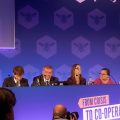
I have been advocating for those who find it most difficult to have their voices heard in health and care (we call them Frequently Ignored Groups or FIGs for short) for more than 40 years. My roles have included a national role with Age Concern England, Chairing the largest network of independent advice centres in Europe, Chair of North Warwickshire Primary Care Trust where we introduced patient representatives on the Board and many more.
All of the positions I have held had meaning for me and each has made a contribution to my thinking on the role of patient voice and patient experience in decision making in the health and care system.
I would have to say though that the most rewarding role has been my time with Healthwatch, both at Healthwatch Staffordshire in 2013/4 and as Chief Executive of Healthwatch Warwickshire since June 2014. I have also been privileged to Chair the regional meetings of Healthwatch across the East and West Midlands and to hear about the tremendous work being done by Healthwatch colleagues across both regions.
In many places Healthwatch has become an important part of the health and care system and a trusted partner to providers and commissioners alike and there are many testimonies to that. This has made the decision to abolish Healthwatch even more difficult to understand
The Secretary of State recently said: “There are many decent people working at Healthwatch who care. But the job of listening to patients can’t be farmed out to an arm’s-length body. It must be core business for the NHS. That is why we’re taking it back in-house and I won’t back down on that either.”…
To characterise the role of Healthwatch as simply “listening to patients” is to profoundly misunderstand the breadth and depth of the work that so many local Healthwatch do.
Healthwatch has a dual role as:
Guard Dog – working with partners to ensure that patients, carers and those who provide services are aware of their rights and responsibilities in relation to each other. Empowering people to be well informed partners in their own care.
Guide Dog –. Supporting individuals to find their way through what can be quite daunting systems towards solutions that most effectively meets their needs. Sharing good practice when we see it, and promoting the good practice, policy and culture change that patients, carers and public tell us are needed.
Within this range of functions listening to Patients is clearly a significant part of what Healthwatch does, but it is only part of what we do.
Other functions include date management. Collecting, collating, and interpreting patient data. Analysing emergent trends and producing evidence-based reports to inform and support providers by highlighting what people tell us is happening out in communities. Our findings are also escalated to Healthwatch England to support and inform their influencing activities at the national level
Healthwatch also undertakes intelligence-based projects and produces in-depth Reports which are then published and widely distributed. Recent examples in Warwickshire include Reports on Children and Young People; Menopause Support Services; Discharge to Assess; Access to healthcare for the Boating Community; PSA testing and many more
All of the Reports are evidence based, balanced and intended to be useful in promoting service improvement. They are designed to share good practice and are not simply about the enforcement of statutory rights and duties.
The Reports have had demonstrable impact and influence largely because of the professional credibility of Healthwatch. The dedication and expertise of Healthwatch staff and volunteers is widely recognised by partners community groups and more widely. It is also important to say that the widely recognised independence of Healthwatch from both the NHS and Local Government has been an important part of building our credibility.
In conclusion Healthwatch serves as both a “Guard Dog” and “Guide Dog,” ensuring patient voices and experiences are heard and promoting improvements in health services based on evidence and experience.
I hope that whatever happens from this point on, the full range of functions being delivered by Healthwatch are part of any new arrangements. It is important that patient and carer’s voices and experiences are a significant part of decision making in the future. The motto for patients and carers must be nothing about us, without us
On a more personal note, I hope that Healthwatch Warwickshire staff, volunteers and Board Directors are given proper recognition for the huge amount of excellent work they have done over many years. They have earned it.
 Chris Bain